
Structural Drying
Moisture removal for wet framing, subfloors, and wall assemblies. Learn how extraction, controlled airflow, dehumidification, and moisture readings support the drying process.
Serving Greeley, Colorado & surrounding areas
Water removal, drying & basement cleanup.
Water cleanup · Greeley, Colorado.
One call connects you with a local contractor for water cleanup, drying, and repair, so you can discuss the job directly.
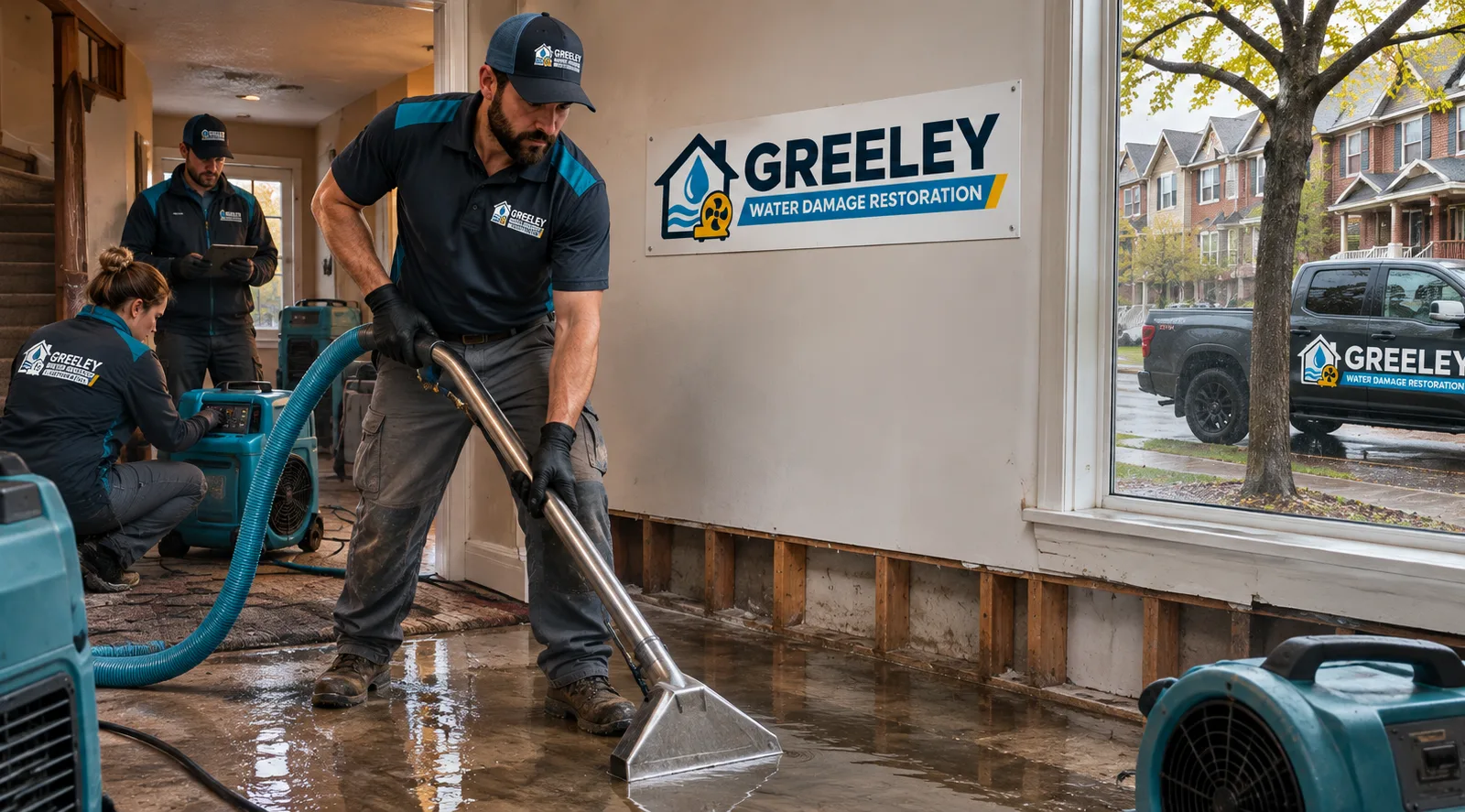
Water damage restoration in Greeley, CO, starts with identifying the water source and checking how far moisture has spread. A leaking supply line can soak flooring and wall cavities even when the visible puddle is small. Basement water can reach insulation, stored belongings, and finished walls.
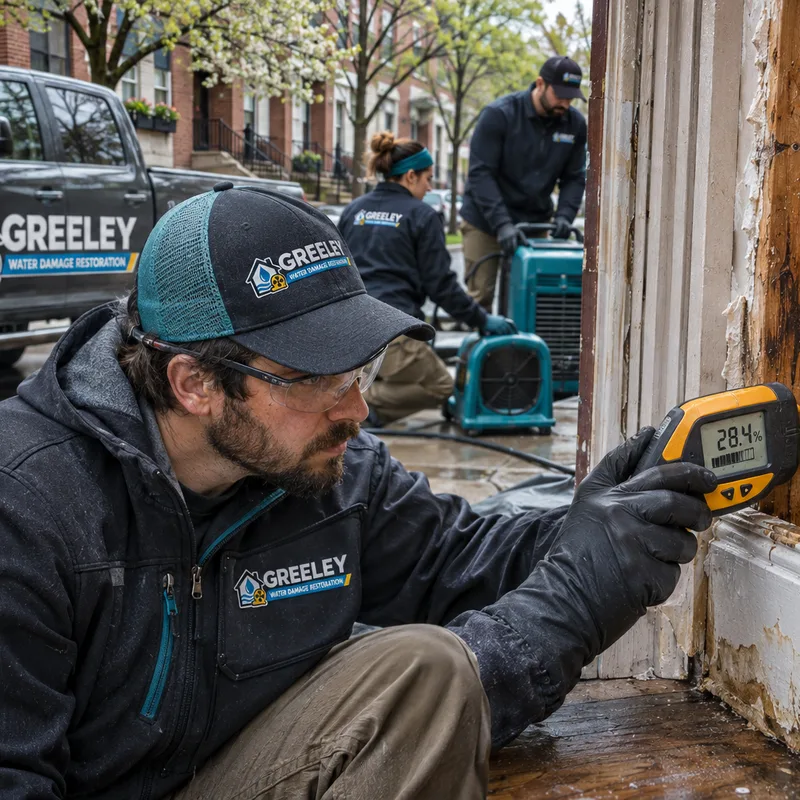
Restoration commonly involves extracting standing water, removing materials that cannot be dried safely, and drying the remaining structure. Moisture meters help a contractor check materials beneath the surface. Air movers and dehumidifiers support drying, while repeated readings help determine when repairs can begin. Painting over a stain or replacing flooring before underlying materials are dry can leave the original problem unresolved.
The source matters, too. Water from a broken clean-water pipe requires a different cleanup approach than sewage or outdoor floodwater. Avoid contact with potentially contaminated water, and stay out of areas where water may have reached electrical equipment. Stop the source only when it is safe to do so.
Northern Colorado's freezing weather can contribute to pipe failures, while heavy rain can expose drainage problems around a foundation. Dry outdoor air does not establish that enclosed walls or subfloors are dry. For water damage repair in Greeley, the contractor should explain what needs drying, what needs removal, and how those decisions affect rebuilding.
Moisture removal for wet framing, subfloors, and wall assemblies. Learn how extraction, controlled airflow, dehumidification, and moisture readings support the drying process.
Water extraction and repair for flooded lower levels, including affected flooring and wall materials. The water source and condition of the basement shape the work.
See what happens when you call and who handles the work.
Practical guidance on electrical hazards, protecting belongings when safe, and documenting damage. Review the first decisions to make before entering a flooded basement.
Mention a burst pipe, appliance leak, basement flooding, or any other source you know about.
Describe where you see standing water, wet flooring, or damp walls.
Say whether the water has stopped or is still spreading.
Mention tenant arrangements, locked areas, or other access restrictions.
Ask what needs drying, what may need removal, and when repairs can begin.
The contractor can discuss the proposed scope, moisture readings, and which repairs are included. Independent contractors assess the property and perform the cleanup, drying, and repairs they agree to undertake.
Ask how moisture readings guide drying decisions, which materials may need removal, and whether the proposed repairs include affected walls, flooring, or other building materials. Confirm the scope with the contractor before authorizing work.
Have the property ZIP code and a brief description of the damage ready.
Enter your ZIP code and you are connected directly with a local contractor who serves that area.
Describe the affected areas and ask whether a property assessment is available.
Water can spread beneath flooring and behind walls.
Describe where the water started and which rooms are affected.
Service availability in Greeley and nearby communities depends on the property’s ZIP code.
In established residential areas near the University of Northern Colorado, water cleanup may involve both occupied living spaces and lower-level rooms.
Immediately south of Greeley, residential properties may need water extraction and drying that accounts for wet flooring, wall cavities, and basement contents.
Beside Greeley and Evans, this small community has residential properties where a plumbing leak can affect adjoining rooms and concealed building materials.
West of Greeley, homes with finished lower levels need careful checks of wet carpet, baseboards, and drywall after water enters the basement.
South of Evans, properties with basements or crawl spaces need attention to moisture below the main floor as well as visible indoor damage.
Yes, you can discuss rental-property water damage with the contractor. Tell the contractor whether you are the owner, tenant, or property manager, since permission to authorize removal and repairs may need to come from the property owner.
Ask the contractor what documentation they can provide. Photographs, moisture readings, and a written scope may help record the damage, but your insurer determines coverage under your policy.
Yes, you can ask the contractor about both cleanup and rebuilding. Confirm which tasks they undertake, particularly drywall replacement, flooring repairs, and any plumbing work needed to address the original source.
You can speak with a contractor while also contacting your insurer. Ask your insurer about policy requirements and discuss immediate damage-control options with the contractor before authorizing work.
Tell us where the water started, which areas are affected, and whether there’s still standing water.